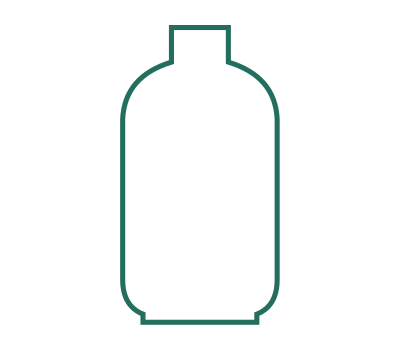
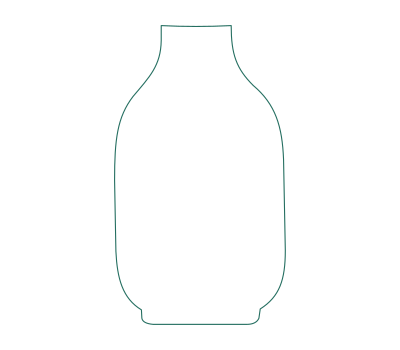
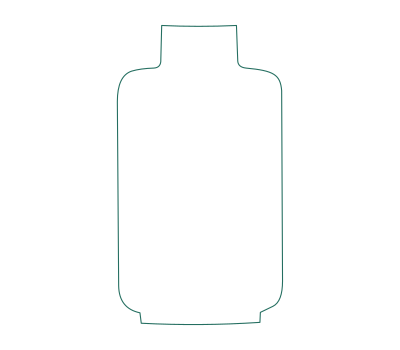
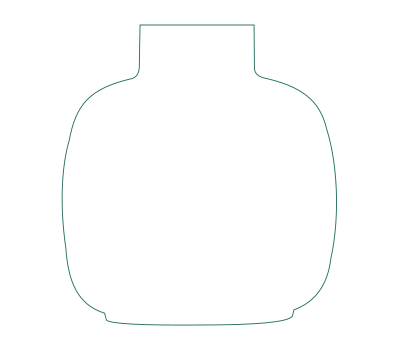
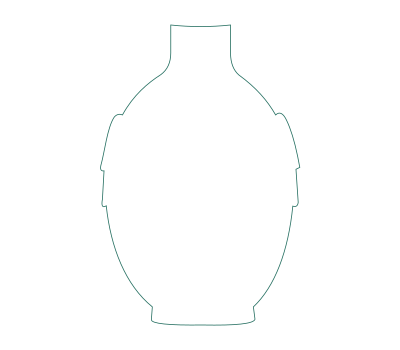
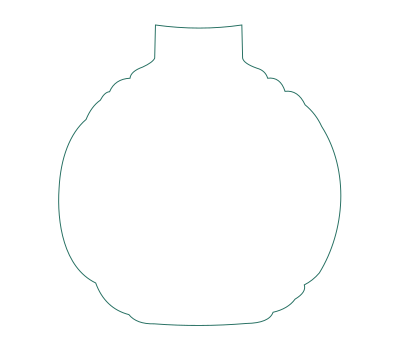
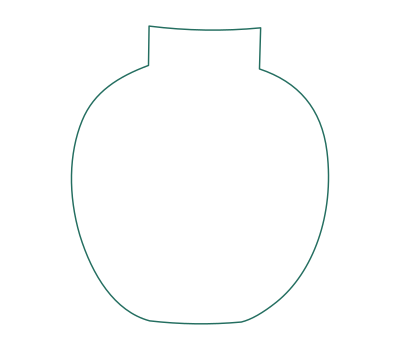
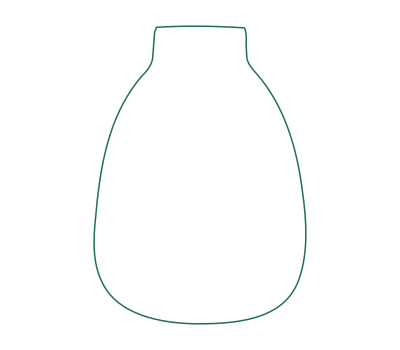
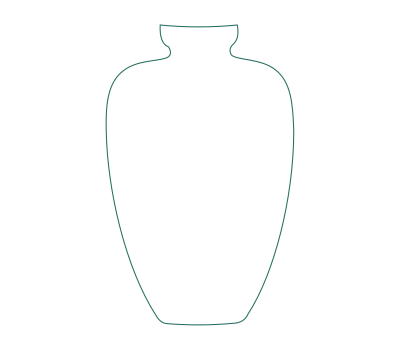
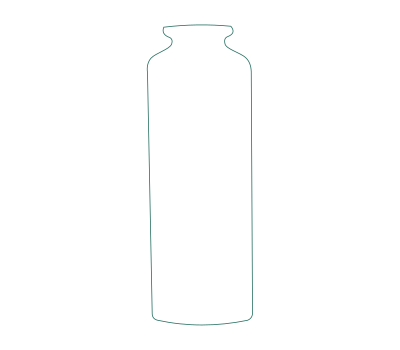
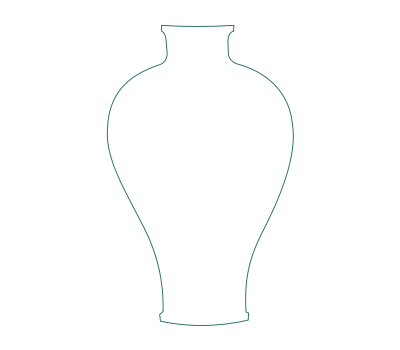
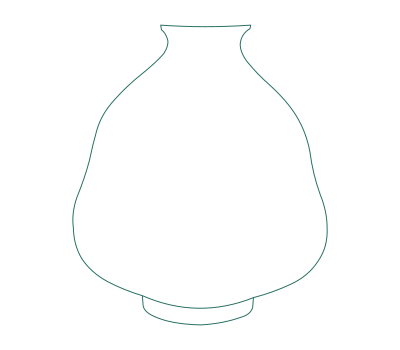
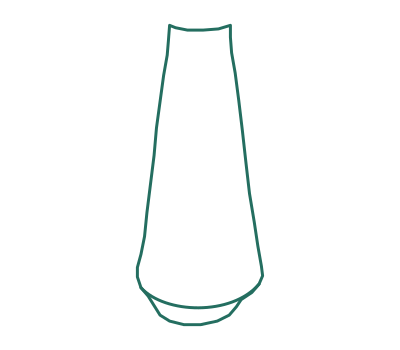
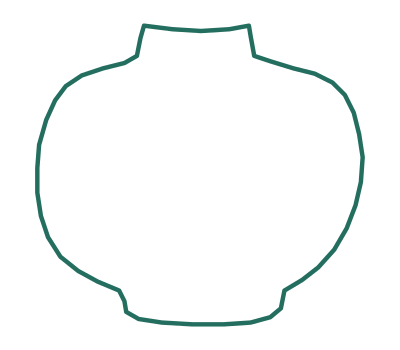
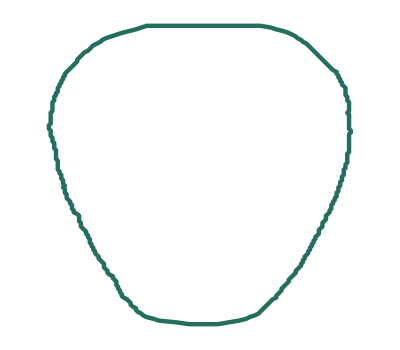
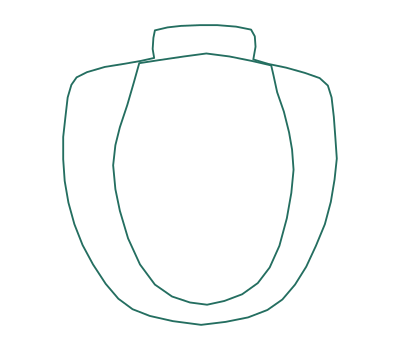
Round in cross-section, with a short neck, high shoulders and tapering body; unlike flattened spade forms.
Gourd
Single-gourd and double-gourd silhouettes.
Reference examples to be added.
Conjoined
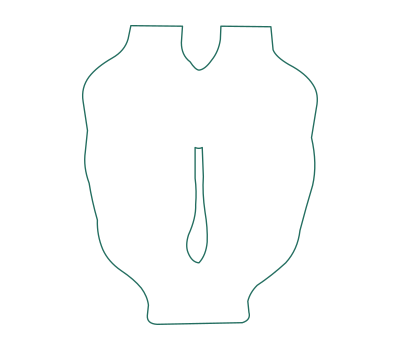
Two or more bottle bodies joined into one object, retaining distinct necks and openings. The bodies may share a base; their individual profiles can vary.
Conjoined describes construction and shape, not age, origin or quality. It is distinct from a double gourd, whose lobes are stacked on one axis.
Example · Item 267779716253. The inner line follows the visible interior boundary; refraction and bevels affect its appearance, so the gap is not a measured wall thickness.
Color
Color reference guidelines
Use clearly catalogued museum or auction examples to anchor historical palette names. Identify collection observations separately and leave uncertain classifications provisional.
Record the ground separately from decoration. Yellow decoration alone does not establish famille jaune; yellow-ground famille rose also exists.
Show representative shades where the photographs support them. Do not invent additional swatches to complete a palette; the current references are not exhaustive.
Keep the source photograph and its catalogue link beside the swatches. Choose colors away from reflections, shadows and unrelated fittings.
Label swatches as approximate colors from reference photographs. They are visual estimates, not measured enamel standards; a precise hexadecimal code does not imply precise historical color.
Compare color relationships alongside material, technique and workmanship. Color matching alone does not establish date or authenticity.
For future photographs of collection objects, consistent lighting, a neutral background and a color reference target would improve comparability. Formal color measurement additionally requires a color-managed workflow.
Current coverage: Famille Rose uses an auction photograph (Bonhams 31886, lot 138); Famille Verte, Blue and White and Sancai use collection photographs; Famille Jaune, Famille Noire and Wucai have museum anchors with identified grounds.
General palette references. Color guidance specific to a bottle type is kept on its study page under Studies (Identification tab).
Compare color with material, form and workmanship. A shared palette does not establish a shared date.
An illustrative Famille Rose palette from the enameled carved-glass phoenix bottle, Bonhams sale 31886, lot 138. The painted decoration combines pinks, yellow, greens, turquoise and blue with dark outlines on a white ground.
Rose pink
#C27B7E
Pale pink
#DFA4AB
Yellow
#CDB259
Deep green
#377960
Leaf green
#95B381
Turquoise green
#61C0A3
Pale turquoise
#98D4C1
Blue green
#4A7D82
Blue
#5F687F
Olive brown
#665609
Dark outlines
#2A2E31
White ground
#F5F5F5
Colors sampled from the fixed reference photograph; these are photographic approximations, not calibrated enamel standards. The stopper and photographic background are excluded. White represents the bottle ground.
Collection item 774, Liu Hai and Toad, is the selected Famille Verte reference. Its decoration shows blue, red, green and yellow on a white ground. The blue on this bottle is identified by the collector as underglaze blue.
Blue
#303971
Pale blue
#9496AB
Red
#883F36
Yellow
#C4BE40
Turquoise green
#67927A
Deep green
#3F553E
Dark outlines
#5A5A42
White ground
#D7D7CF
Swatches are 5-by-5-pixel median samples from the reference photograph, excluding the stopper and background. They are photographic approximations, not calibrated enamel standards. Color alone does not determine whether decoration is underglaze or overglaze.
Yellow ground, famille verte decoration. Look for the relationship between the yellow background and the green, aubergine and white decoration. The National Gallery of Art treats famille jaune as a subgroup of famille verte, usually with this more limited range of enamels applied to biscuit porcelain. Museum reference: Jingdezhen, Kangxi period (museum attribution late 17th–early 18th century); the museum identifies these as porcelain with yellow enamel and famille verte enamels on biscuit. This is a general ceramic palette reference, not a snuff-bottle dating reference.
Yellow ground
#DED18B · Ground
Pale green / turquoise
#8EBAA0
Leaf green
#6D8950
Deep green
#294E35
Aubergine / brown-purple
#9A8079
Reserved white flowers
#E5E2C9
Dark outlines
#413B2D
Approximate colors from the reference photograph. Visual estimates, not calibrated measurements or a fixed recipe; lighting, wear and screens affect appearance.
Black ground, famille verte decoration. The defining relationship is green-family enamel decoration against a glossy black background; the light leaves and blossoms stand out strongly from the ground. Museum reference: Jingdezhen porcelain with famille noire enamel decoration, dated by the museum to the late 19th–early 20th century (Guangxu period, 1875–1908); its Kangxi mark is described as apocryphal. This is a palette reference, not evidence for the age of a similar snuff bottle.
Black ground
#101615 · Ground
Deep green
#08714B
Pale leaf green
#A0C39D
Turquoise green
#77B8A6
Aubergine / muted purple
#A28E94
Soft yellow
#CEC398
Warm white
#E3DFD0
Approximate colors from the front-view photograph; the grey photographic backdrop is excluded. Visual estimates, not calibrated measurements or a fixed recipe.
Collection · Item 1446
Photograph from the collection record.
Blue and White
Cobalt blue painted under a clear glaze on a white porcelain body. The single pigment gives a range of tones, from deep, nearly black-blue lines and dense areas to pale washes. Collection item 1446, a soft-paste blue and white bottle with Guanyin riding a qilin.
Deep cobalt
#2B2E63
Mid blue
#586299
Pale blue wash
#7882AA
White ground
#CACBCD · Ground
Approximate colors from the reference photograph of the body; the coral stopper and backdrop are excluded. Photographic estimates, not calibrated cobalt standards.
“Five-color” porcelain: underglaze cobalt blue combined with overglaze enamels, chiefly iron red, green and yellow, on a white ground. Museum reference: The Met describes this barrel-shaped jar as porcelain painted in underglaze blue and overglaze polychrome enamels, with a Wanli mark and of the period (1573–1620). This is a palette reference, not evidence for the age of a similar snuff bottle.
Underglaze blue
#263680
Deep blue
#0E1852
Iron red
#7D393C
Green
#64756D
Yellow
#A5835D
White ground
#CBC8D0 · Ground
Approximate colors from the museum photograph; the backdrop is excluded. Photographic estimates, not calibrated enamel standards.
Collection · Item 530
Photograph from the collection record.
Sancai
“Three-color” lead glazes associated with the Tang dynasty: amber, green and cream glazes applied over a light earthenware body, allowed to run and pool together. Collection item 530, a sancai tripod censer.
Amber
#C8A94A
Brown amber
#9A762B
Green
#6F8656
Deep green
#53643E
Pale green
#94A06E
Cream
#E8E2BC · Ground
Approximate colors from the reference photograph; the backdrop and shadows are excluded. Photographic estimates, not calibrated glaze standards.